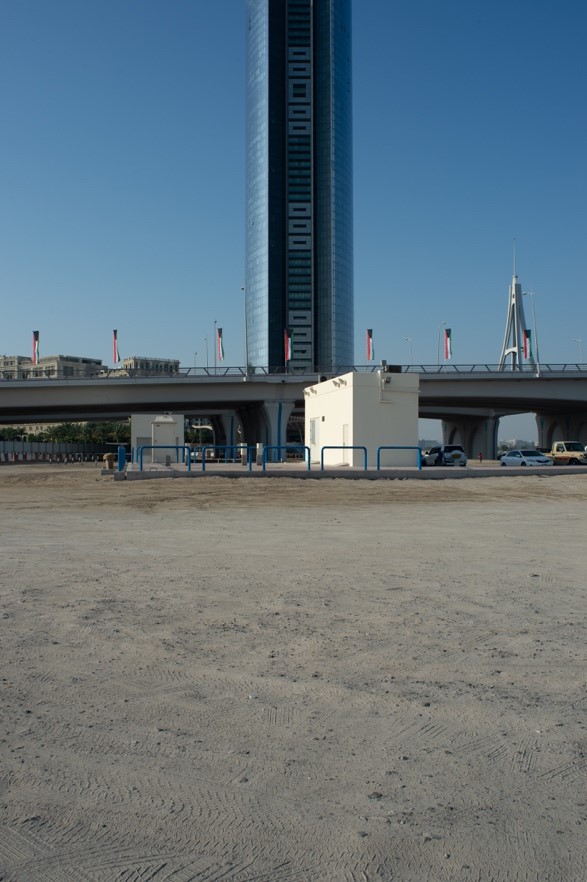
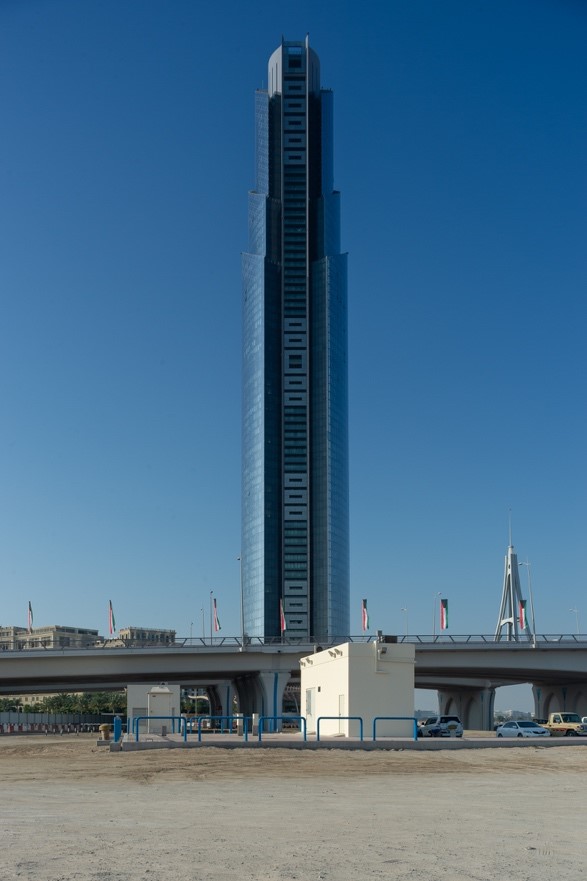
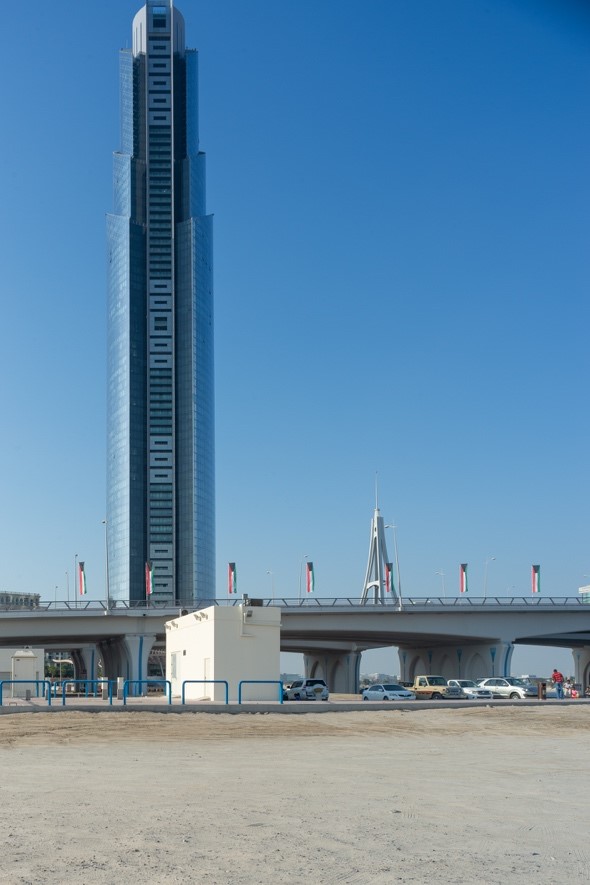
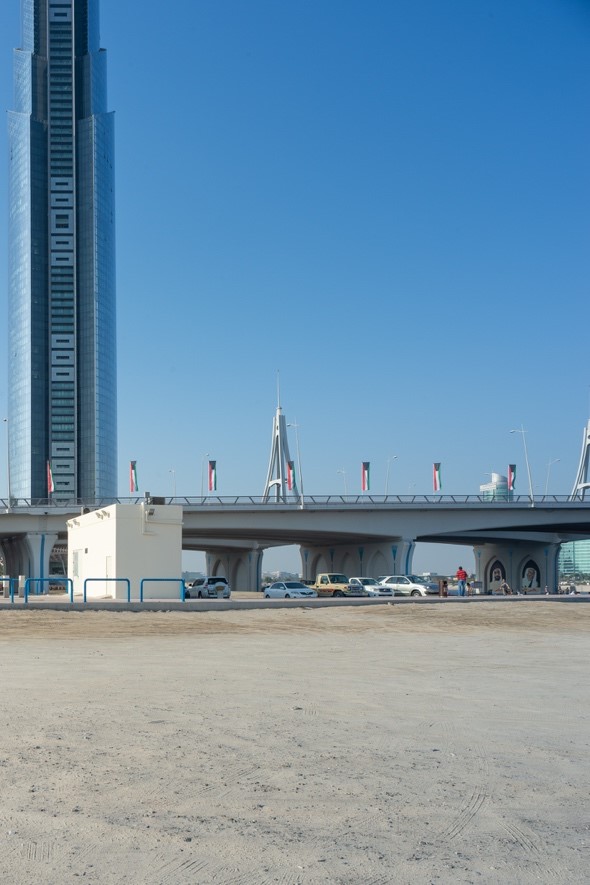
Shift Lenses! Also called perspective Control lenses. So, what exactly the shift/perspective control lenses are? Well, technically speaking, these lenses are used to straight up the converging line. What are converging lines? Well, when we shoot any tall structure using wide-angle lenses, the building appears to look falling backward. These lenses are mostly & specially used in architecture photography to capture structure where the lines of the structure captured straight up and kill that converging effect. Take a look at the below example, which is not a fascinating one but still good enough to clear the concept about the shift lens characteristic.
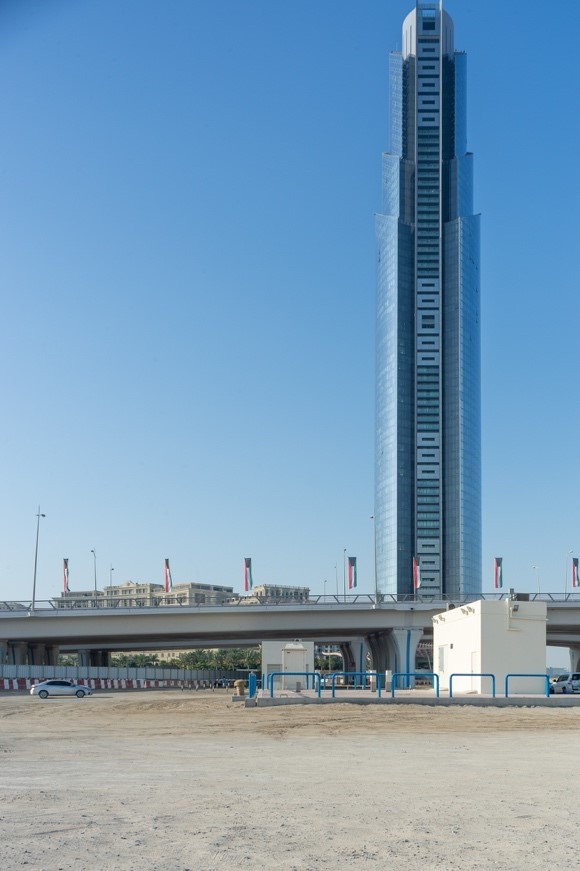
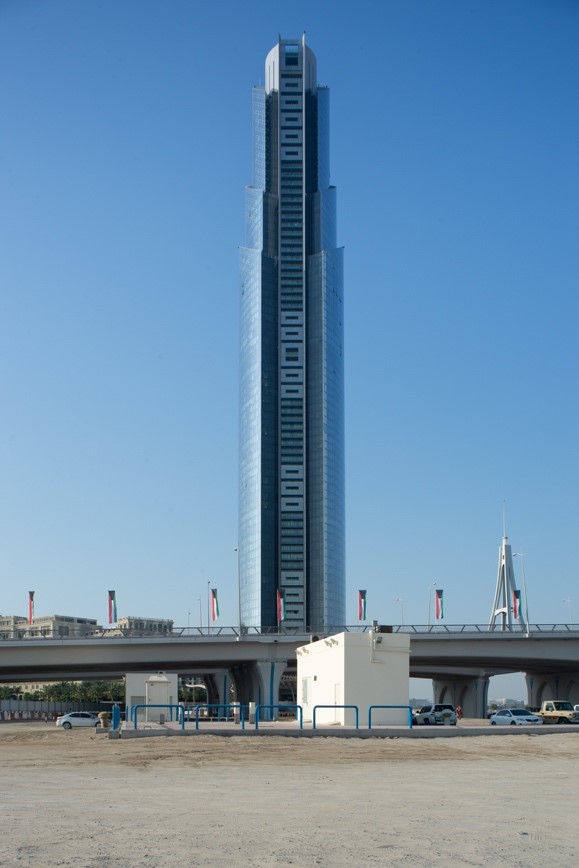
The left image was taken using Nikon D4 with the Nikon 28mm f/3.5 AI-S Shift lens. Shift maximum straight up, which reduced the converging effect to ZERO. The right image was taken with a 14-30mm f/4S lens on Nikon Z6 at the same focal length of 28mm, clearly showing the converging line marked in the red circle. Even if you look at the big hotel building at the back, its appearance is looking change in the left image in comparison to the right due to the shift effect of the lens.
But shift lens is just not used only for eliminating the converging line effect. They also used to capture extra areas as they tend to shift the focal plane (virtually) without moving the camera itself. The question is, how is it possible?
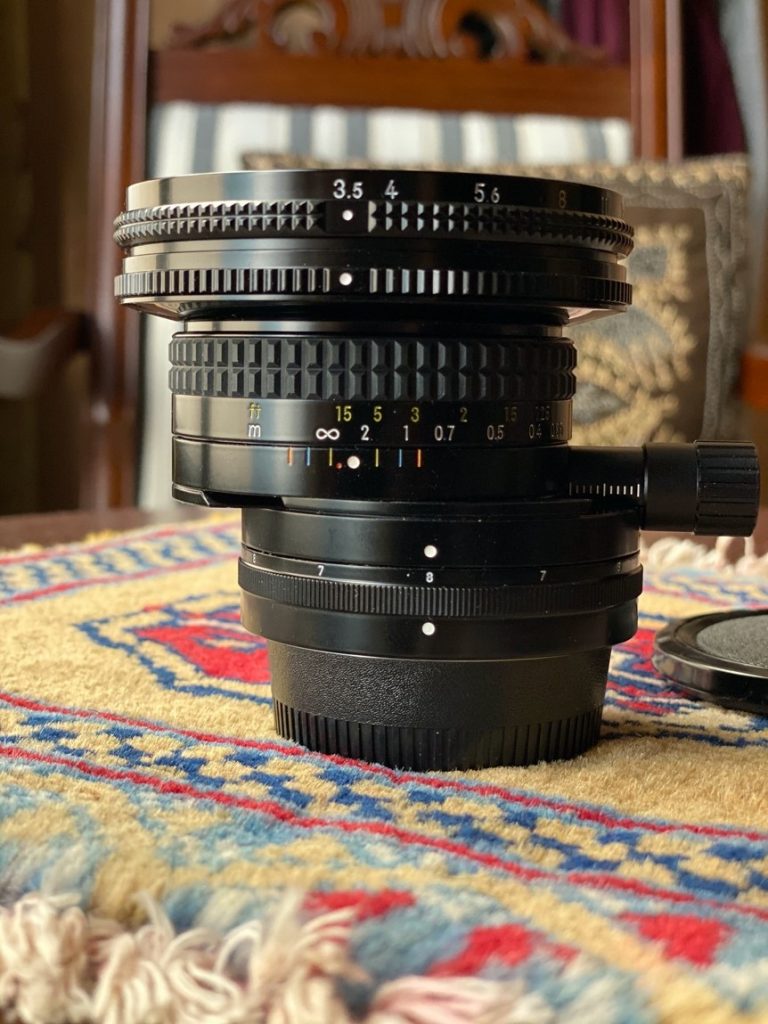
What happens in shift lens is, they have a much larger area of projection, which is equal to medium format. In short, the rear end of the lens, which connects with the camera body is so big that the circle of projection of any image that this lens is going to cast, can easily cover the entire Medium Format sensor. These lenses help us to take an extra area of the image without moving the camera/tripod. Take a look at the below image and see how big the rear opening of this shift lens is.
So how shift lens works? Normally there is the knob on the shift lenses, which helps us to move the lens either in one direction or in two directions (depending on the model/manufacturer). The lens that I have in this example is the Nikon 28mm f/3.5 AI-S Shift lens, which moves only in one direction. So now I am going to cover the extra area? Well, these lenses typically come in the form of assembly, which helps the rear mount to rotate 360 degrees, so when you fix the lens on the camera, the mount gets lock with the camera body, but the rest of the lens assembly rotates 360 degrees. Note that all such lenses typically come manual focus with no Autofocus mechanism or electronics into them due to the nature of the lens and task that it does.
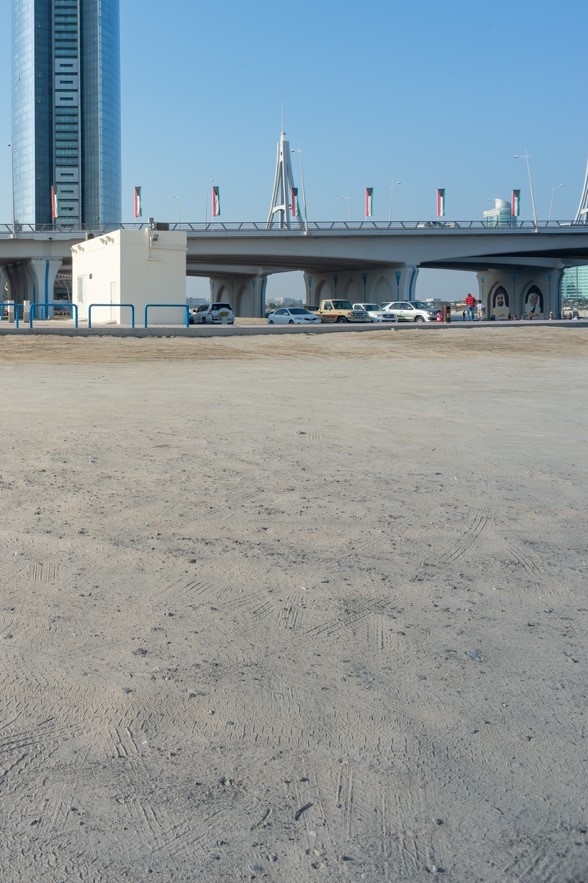
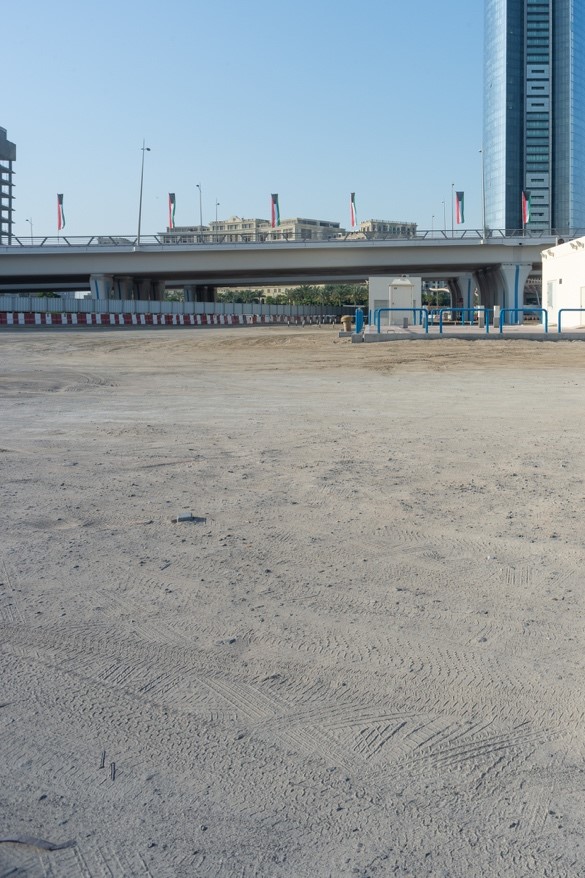
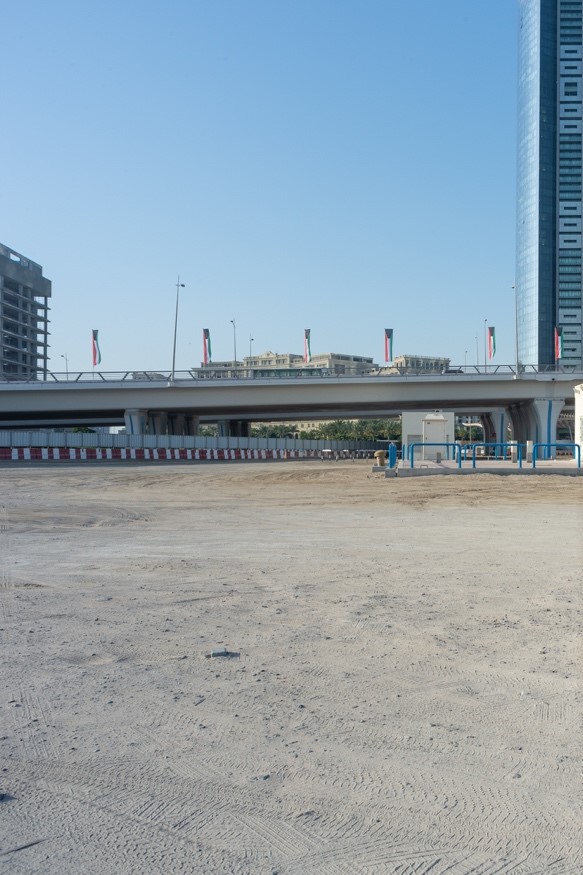
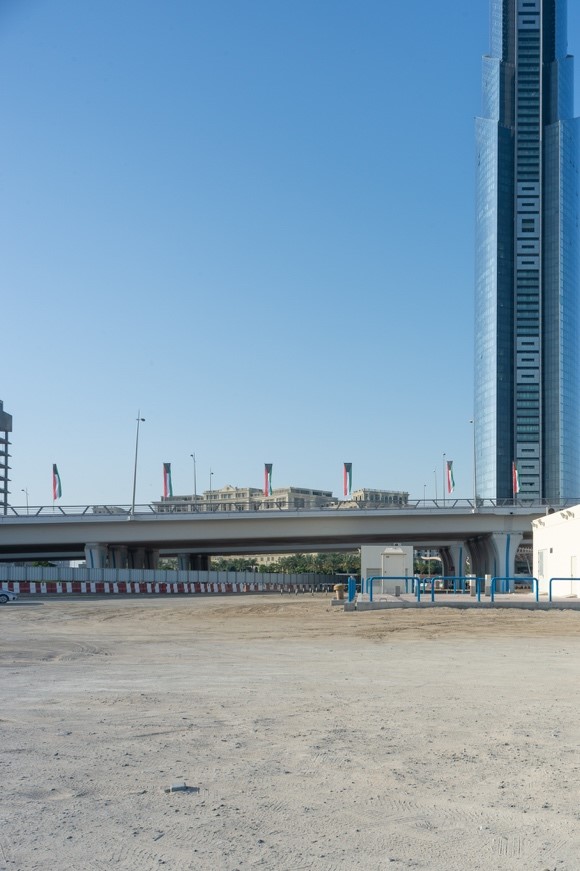
Take a look at the below sample images where I took the first shot straight facing to the building, and then I shift the lens to its maximum position, which reduces the converging effect to zero and then rotate the lens assemble 360 degrees to cover extra area. Note that the camera I used for this testing is Nikon D4, which is a 16MP camera. But the output resolution, which I end up with, was way more than just 16MP.
The sample image is taken straight with Zero Shift & Zero rotation.
The image was taken with the maximum shift at 12 o’clock without moving the camera without rotation.
The image was taken with maximum shift and rotation at 1 o’clock.
The image was taken with maximum shift and rotation at 2 o’clock.
The image was taken with maximum shift and rotation at 3 o’clock.
The image was taken with maximum shift and rotation at 4 o’clock.
The image was taken with maximum shift and rotation at 7 o’clock.
The image was taken with maximum shift and rotation at 8 o’clock.
The image was taken with maximum shift and rotation at 9 o’clock.
The image was taken with maximum shift and rotation at 10 o’clock.
The image was taken with maximum shift and rotation at 11 o’clock.
The image was taken with maximum shift and rotation at 12 o’clock.
And when I finished taking all 12 images at 12 different positions, in Adobe Lightroom, I stitched twelve 16MP images and ended up with 50MP one single image with lots of room to crop.
So, as you can see, the shift lens (only) is serving us for two purposes.
To eliminates the convergence effect when it comes to Architecture, so lines captured straight.
To get panorama images by capturing more frames without moving the tripod so, in this way, perspective/horizon/tilt all remains the same, and we have less headache to deal with in post-processing. This is an ideal lens for landscapes and architecture photographers.
Now let’s talk about the lens that I used to demonstrate the above two phenomena. I came across this lens from a google long ago, but I never paid attention to it. This lens Nikon 28mm f/3.5 AI-S Shift lens is a full-time manual and fully mechanical lens only what it means that there are no electronics in it of any kind. There is no autofocus in it. Even the new Nikon 19mm f/4E, which is a “tilt & shift” lens, is also a manual focus lens only. The following are the salient feature of this lens.
This lens is a SHIFT ONLY There is no tilting effect on it.
Lens shifts only in ONE direction.
The lens is fully mechanical with a hollow inside.
The lens rotates 360 degrees with 12 stopping points. Each rotation is 30 degrees.
Lens got two aperture rings
One ring is to set the aperture value only.
The second ring is to set the actual aperture value.
There is no Autofocus in this lens.
The lens is built like a tank, Made in Japan.
Lens sharpness is incredible.
Micro contrast produced by this lens is what I never saw from any tilt/shift lens.
You can see a detail video about this lens using this link on our YouTube channel name VUEGRAPHY.
I hope you guys have some new insight about the shift lenses. Regardless of the brand you use, I must say that you do try ones in your photography life tilt/shift or shift lens if your brand offers it, only to see how dynamic they are. According to my limited knowledge only Samyung (also known as Rokinon), Canon & Nikon are making such native lenses for full-frame cameras. Also, there are 03rd party lens manufacturers making shift lenses like Schneider, Arsat, Arri, HARTBLEI, which you probably never heard or read before.
Besides native shift lenses, there are some adapters available using which you can adapt any lens and turn it into a shift lens with some limitations. Such adapters usually are making by Fotodiox, Kipon, Fotga, FocusFoto, etc. These are the cheap solution to enjoy the shift effect but with limitations. Therefore, it is better to go with a native shift lens.
Its time to wrap up this blog at this point. I will see you later with new things, some further info soon in the next blog. Till then …. Take care and keep clicking.